Your browser is out-of-date !
update your browser to view this website correctly. Update my browser now


E-TRV: our new connected thermostatic radiator valve for hydronic heating
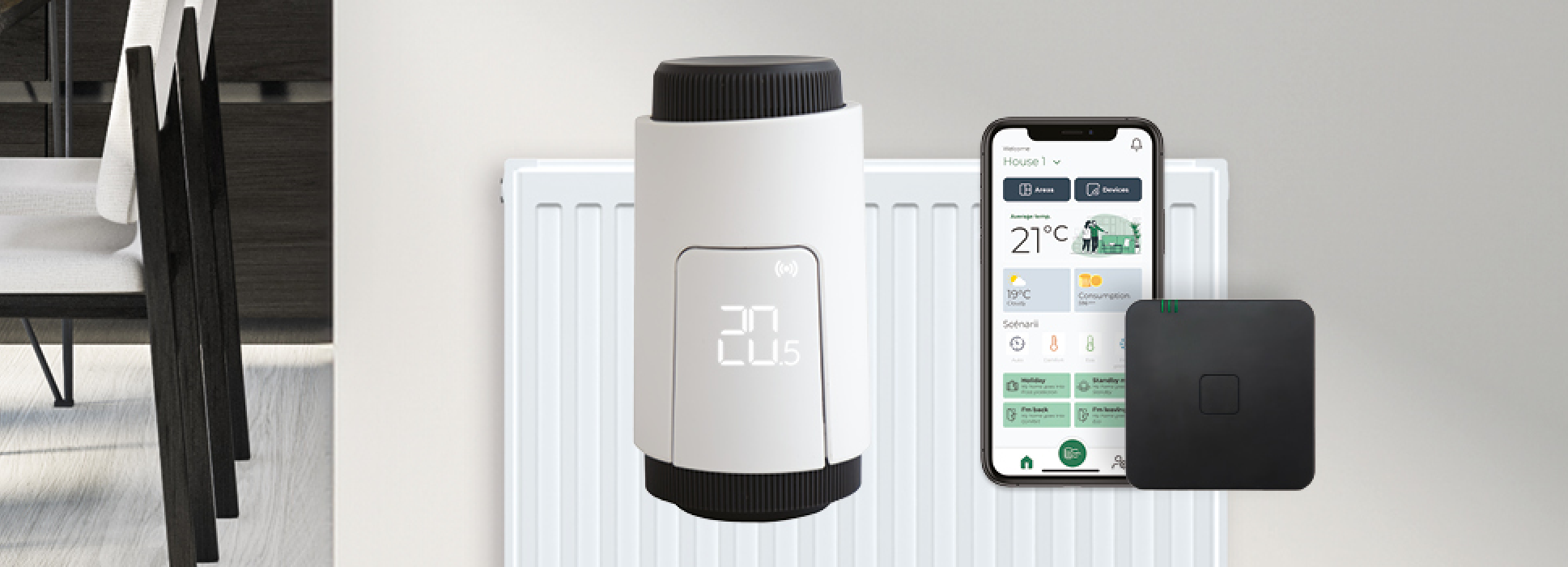
Precise hydronic heating control, designed for connected HVAC ecosystems
With the E-TRV smart thermostatic radiator valve, hydronic heating systems benefit from greater precision, flexibility and energy efficiency. Combined with the multi-protocol gateway and the ECTRL application, it enables local or remote control tailored to the needs of residential and commercial buildings.
• Room-by-room control
Precise adjustment of the temperature setpoint to provide the right level of comfort, at the right time, in each equipped zone.
• Local or remote control
Local system control via Bluetooth®, with or without an Internet connection, or remote control via the multi-protocol gateway and the ECTRL application.
• Energy optimisation
Customisable programming, ready-to-use operating modes available through the app, and intelligent control to reduce energy consumption while maintaining the required level of comfort.
• Simplified deployment
Quick installation on most hydronic radiator valve bodies.
• Open and scalable ecosystem
Connection to the ECTRL ecosystem via the LoRa® / Wi-Fi / Bluetooth® multi-protocol gateway, with Zigbee 3.0 interoperability depending on the gateway model used.
Easy to install and compatible with most hydronic heating systems
• Wide compatibility: compatible with most radiator valve bodies thanks to its standard M30 x 1.5 mm thread and the supplied M28 x 1.5 mm and Danfoss RA adapters.
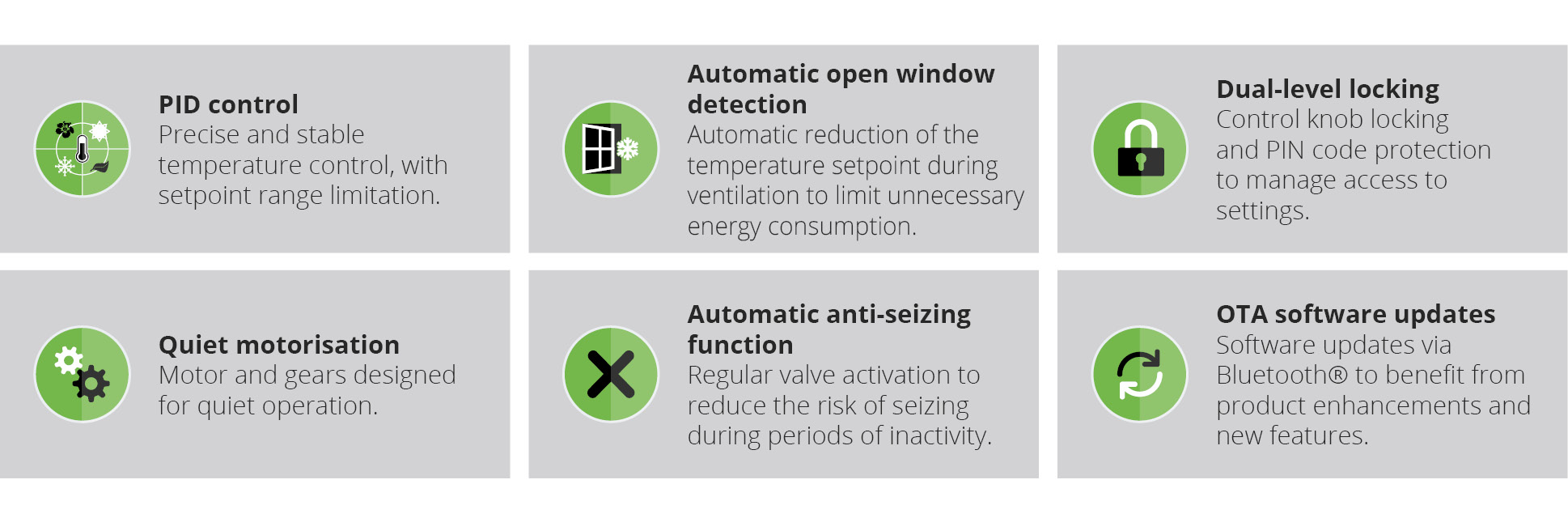
• Designed for installation flexibility: can be installed horizontally or vertically, on the right or left side of the hydronic radiator or towel rail, with an adjustable backlit display.
• Simplified commissioning: automatic valve stroke calibration at start-up and an integrated anti-seizing function to help maintain reliable valve operation over time.

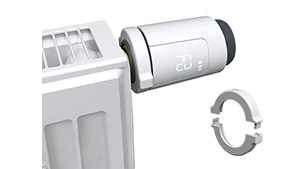
Optional: anti-theft ring
The anti-theft ring helps secure the installation by reducing the risk of unauthorised removal of the E-TRV thermostatic radiator valve. Easy to install and discreet once fitted, it is compatible with M30 x 1.5 mm, M28 x 1.5 mm and Danfoss RA mounting configurations.
It is particularly suitable for projects in collective housing, managed residences, commercial buildings or sites where protecting installed equipment is a key requirement.
Precise control, integrated safety and scalability


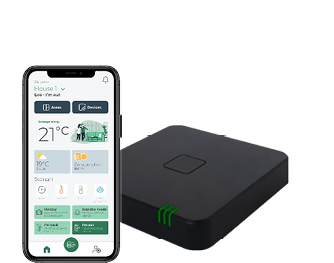
Multi-protocol connectivity with the gateway and the ECTRL application
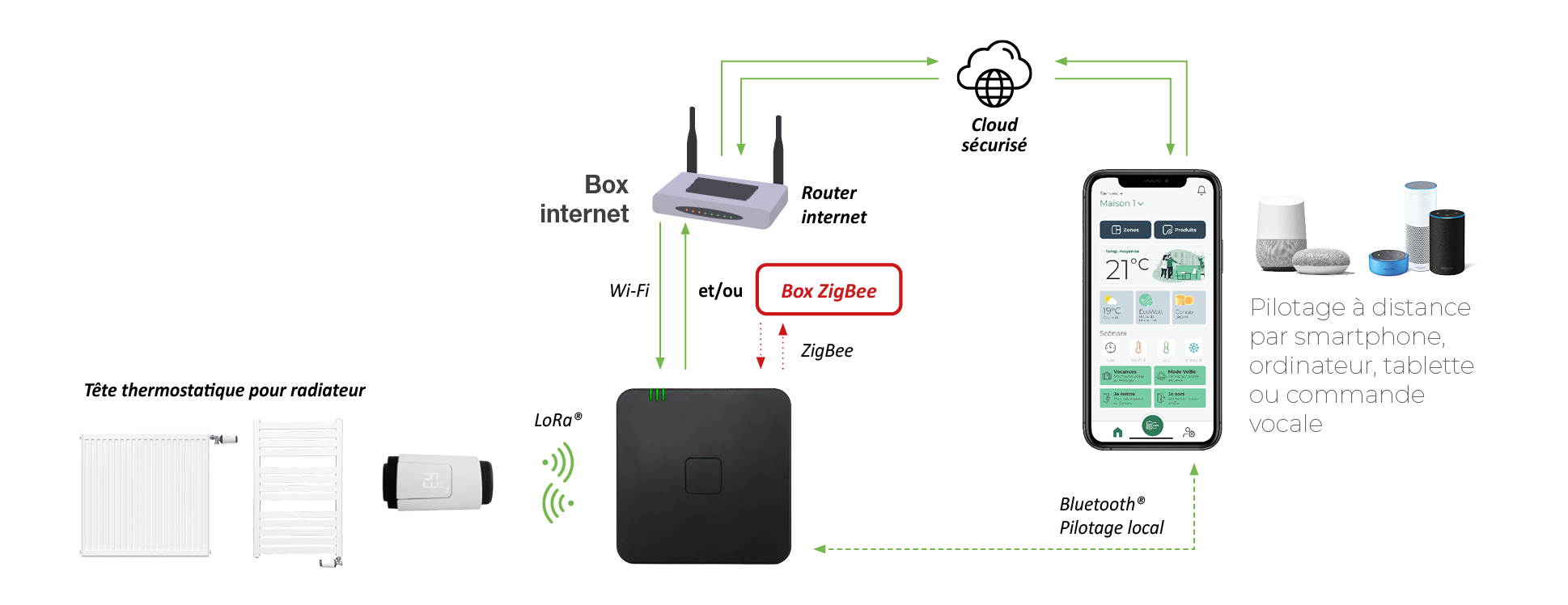
The multi-protocol gateway enables multiple devices to be connected and controlled locally or remotely, and integrated into different HVAC ecosystems.
The E-TRV communicates with the gateway via the long-range LoRa® protocol, while the connection to the ECTRL Cloud is provided via Wi-Fi through the Internet router.
The gateway also provides Zigbee 3.0 interoperability with compatible home automation ecosystems. Bluetooth® enables pairing with the application and local control, with or without an Internet connection.
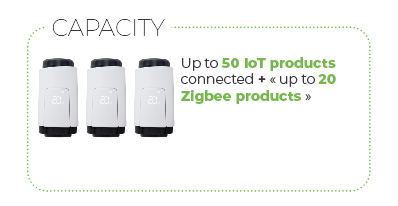
• Simplified installation: wall-mounted or placed on a table; mains powered via the supplied adapter and USB cable, with no batteries to replace.
• Integrated diagnostic interface: 3 multifunction indicator lights show connection status and any alerts, with dedicated buttons for pairing and reset.
• Local or remote control: management of temperature setpoints, operating modes and programming, with access to operating information and diagnostics via the application.
• Simplified on-site deployment: quick pairing of E-TRVs with the multi-protocol gateway and individual identification in the application to simplify the assignment of devices to different rooms or zones.
Autonomous and interoperable ecosystem
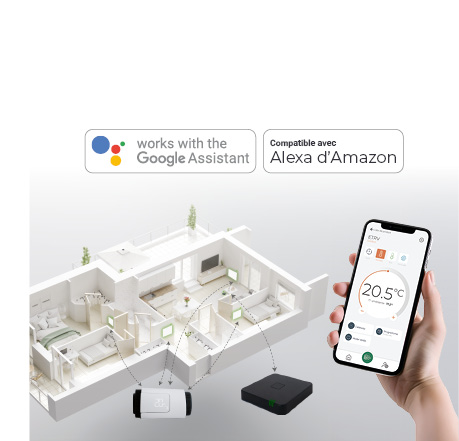
Local or remote control with the ECTRL application
The customisable ECTRL application extends the E-TRV functionality and enables local or remote control of the installation, depending on the configuration, from a smartphone, tablet or PC.
• Daily and weekly programming: definition of heating periods according to occupancy patterns and the requirements of each room or zone.
• Operating modes: Auto (programming), Comfort, Eco and Frost protection to quickly adapt the operation of the installation to different uses.
• Flexible system management: remote adjustment of temperature setpoints and operating modes to adapt the heating to changes in occupancy or specific building requirements.